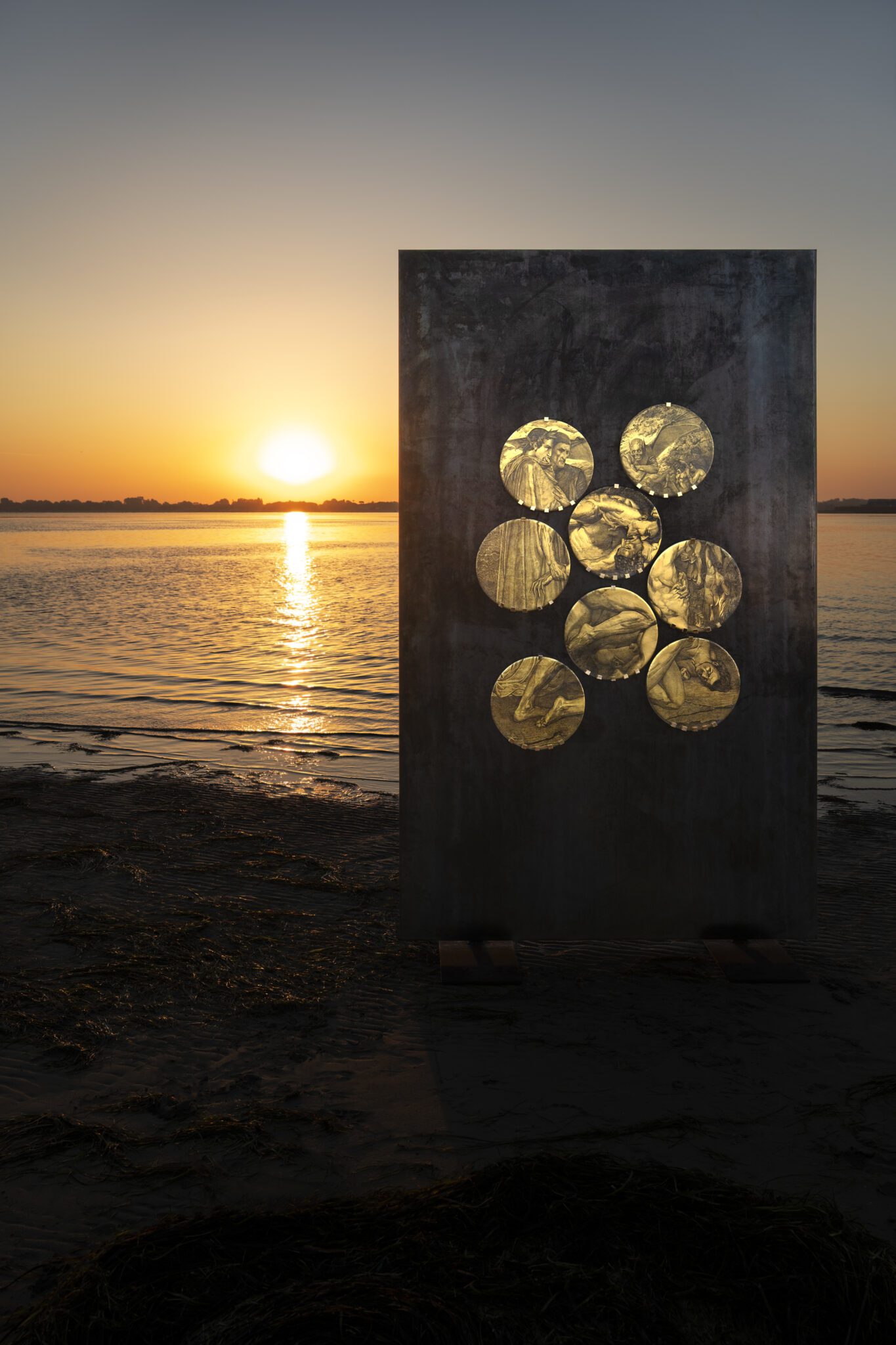
Hell, 1953
Size
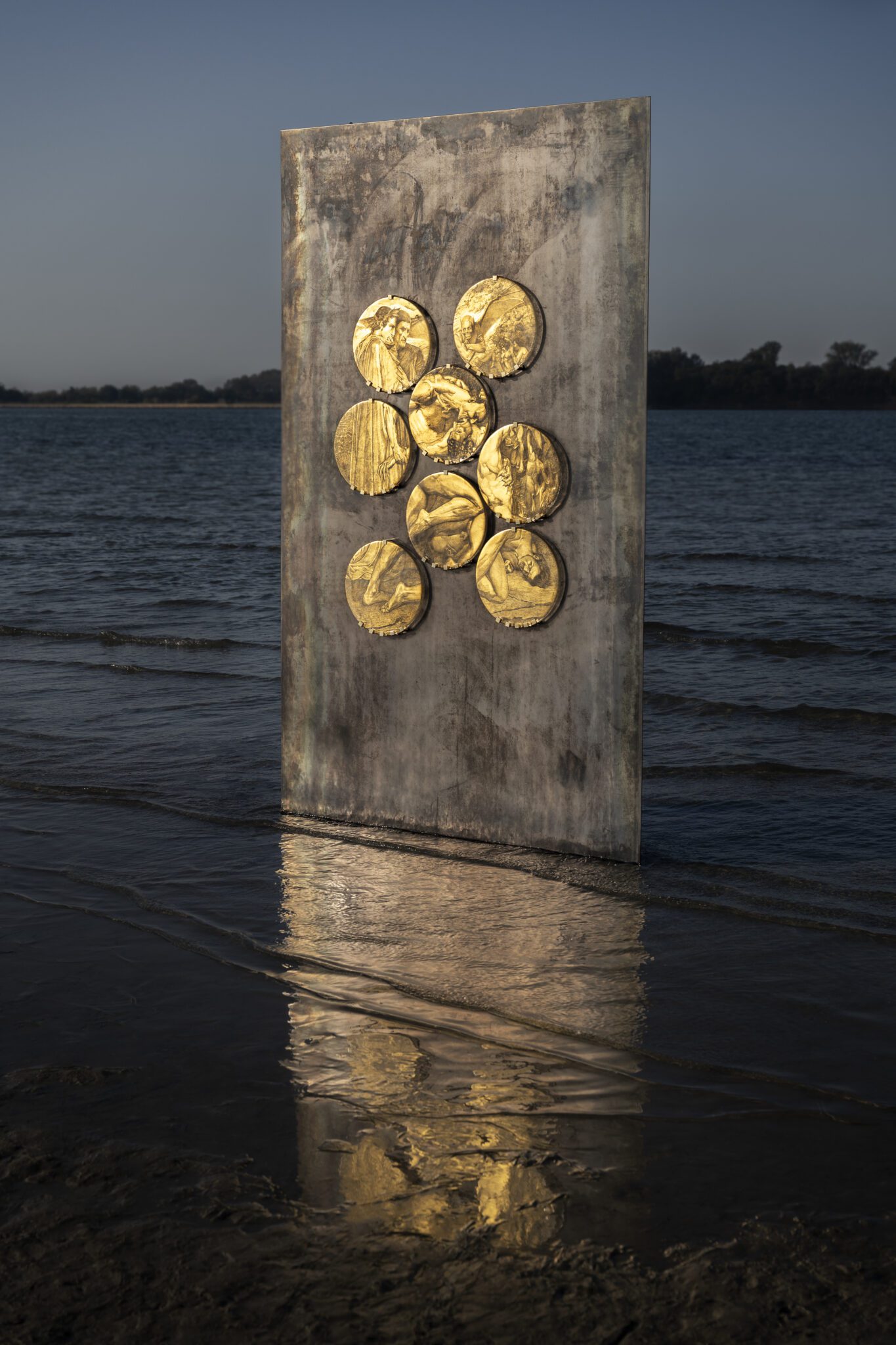
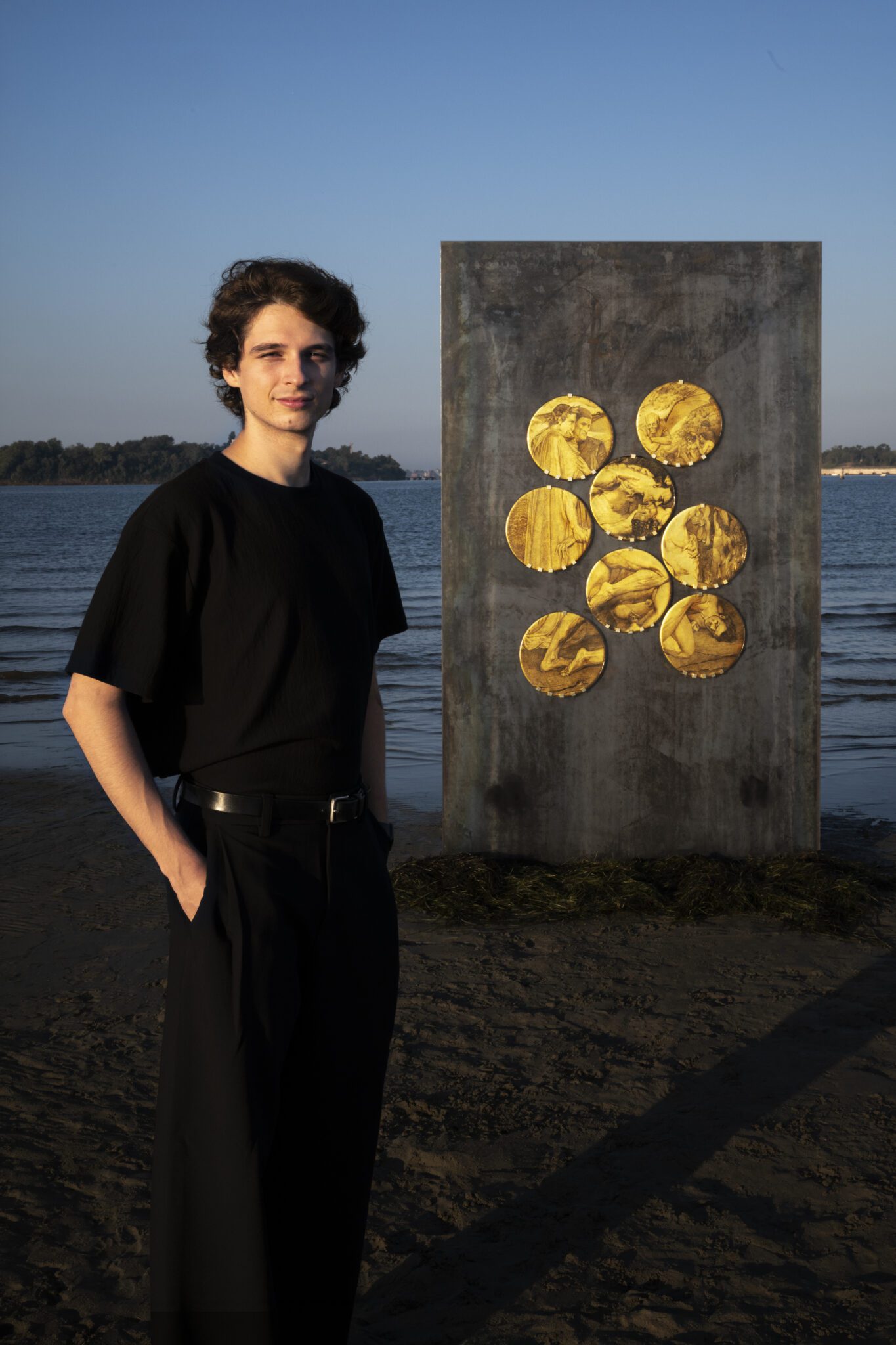
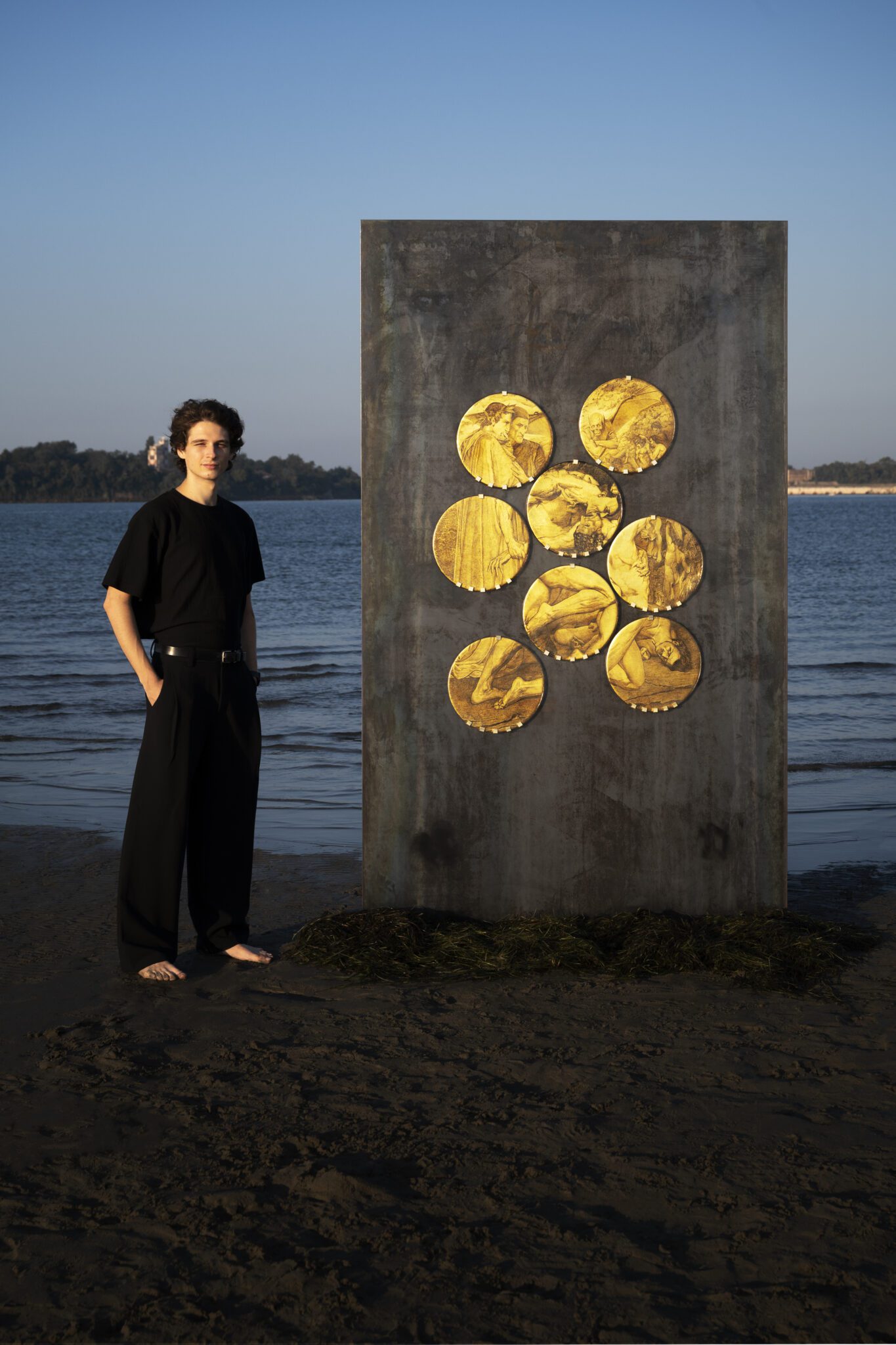
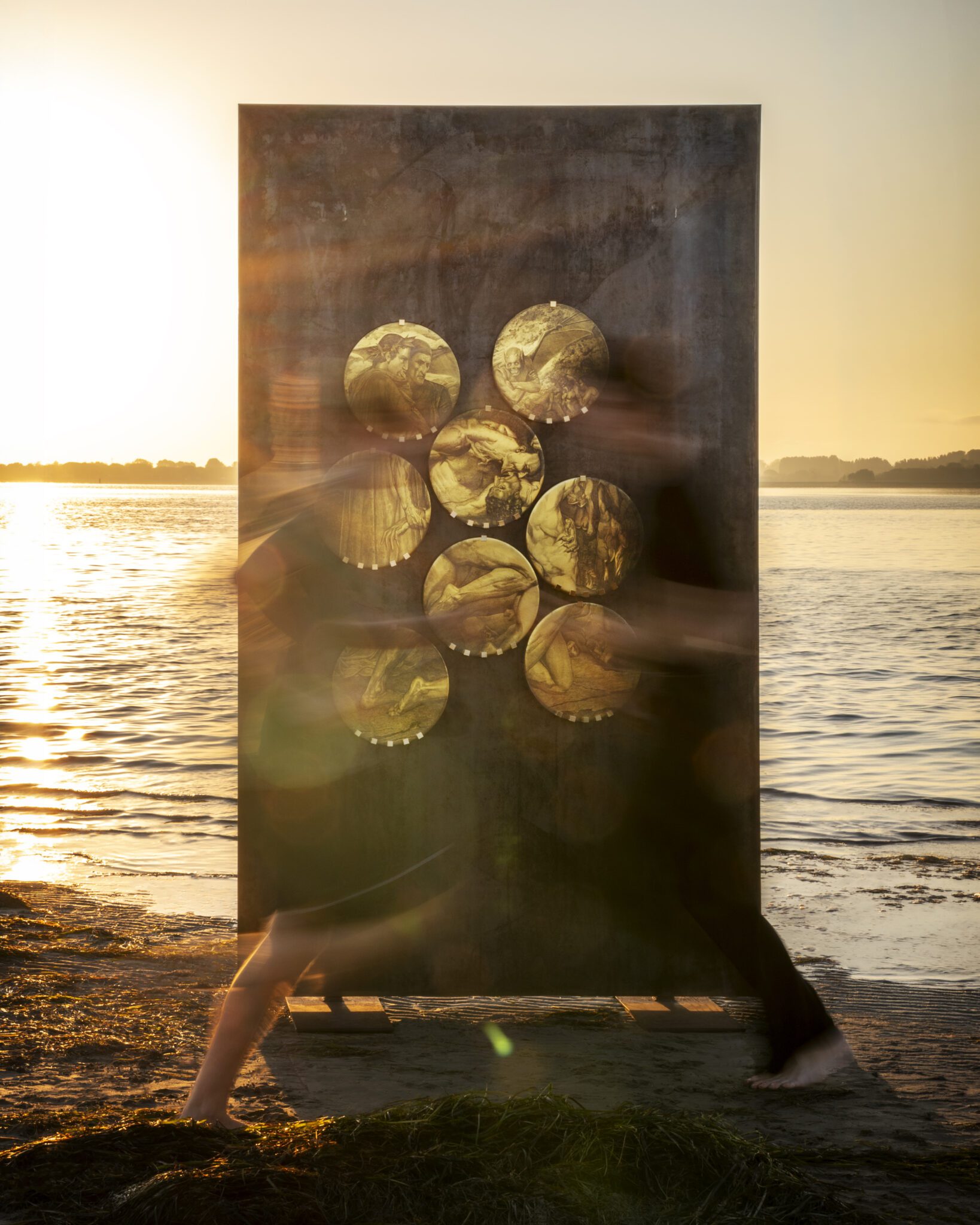
250 x 150 cm
Year
2025-2026
Material
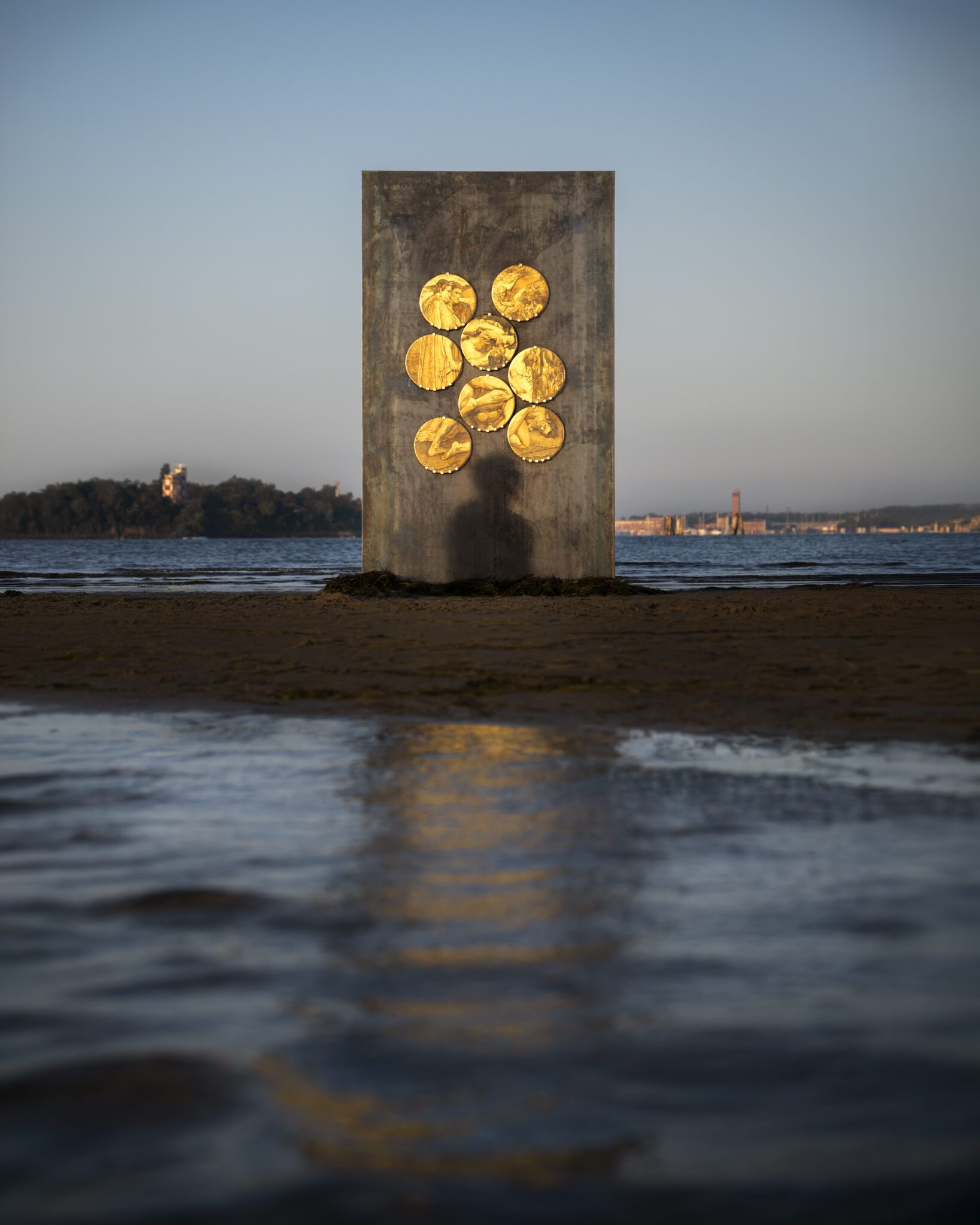
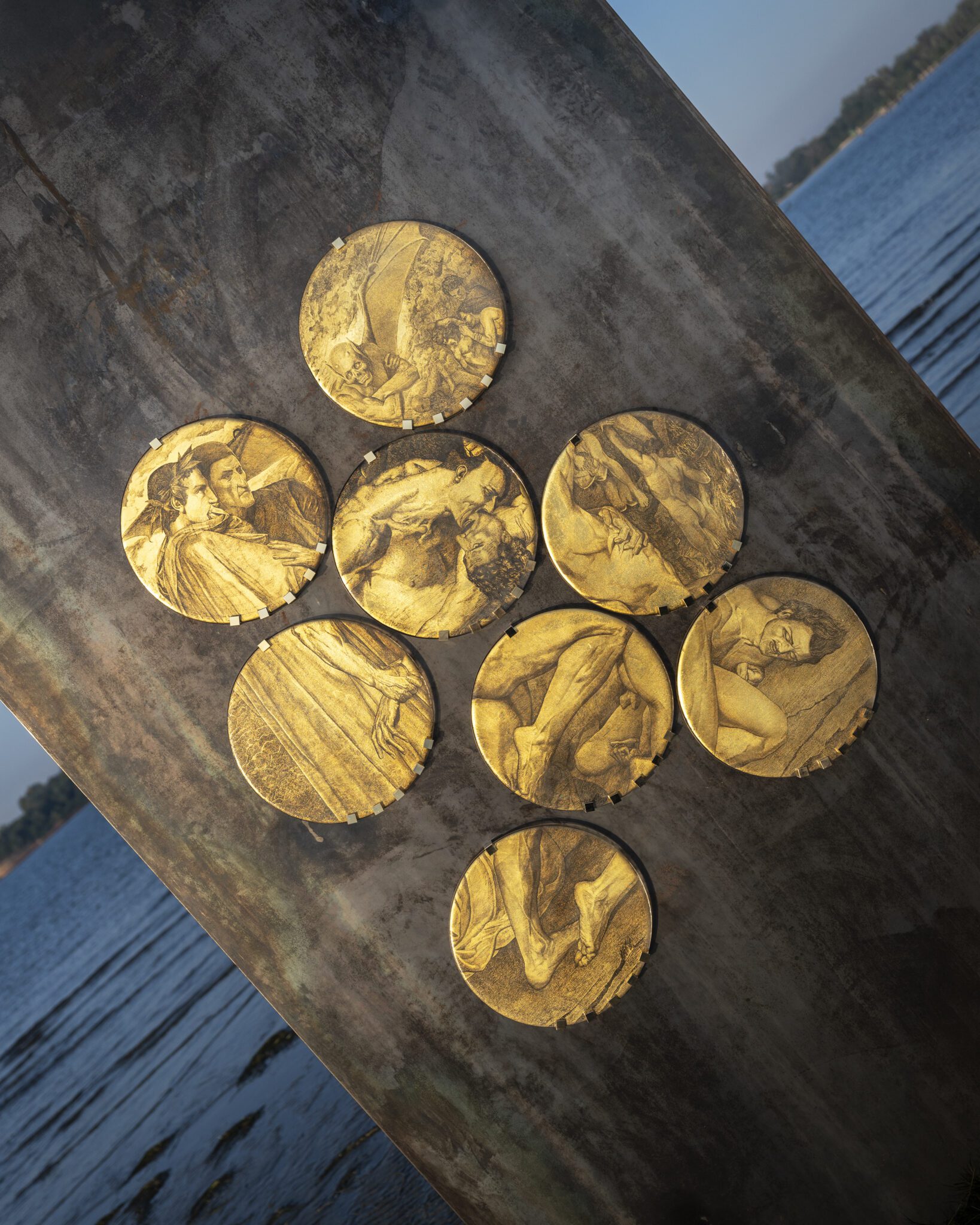
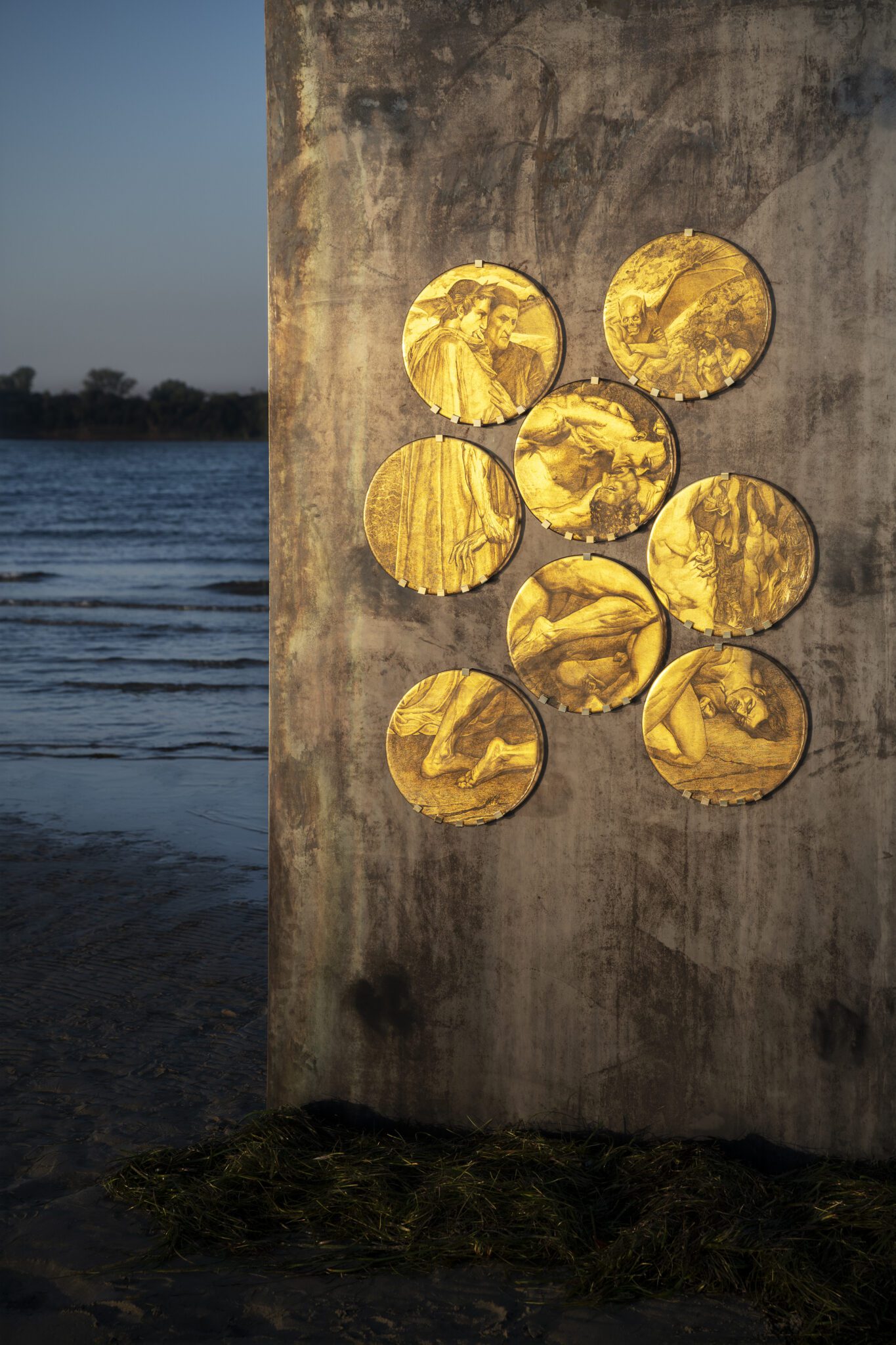
Murano Glass, 24K gold leaf, corten steel panel
Technique
Gold Glass
Price
Upon request
Author
Riccardo Toso Borella
or
Short description
Dante, vieni me appresso: chi son quell’ombre
che’l vorticar bieco io veggo
in orrida pugna l’un l’altro menar?
Ed elli a me rispose:
“Ei furon del Sacro Roman Imper il Duce,
delle Steppe levanti il Tiranno.
Ciò che’n Polonia desian che si compose
il tradir del Barbarossa infin dischiuse.
Bada ben a quei che’n altro tempo a lor miranno
che delli Inferi le porte non vollero mai richiuse.
Riccardo Toso Borella, Poesia per Hell, 1953, Settembre 2026
Description
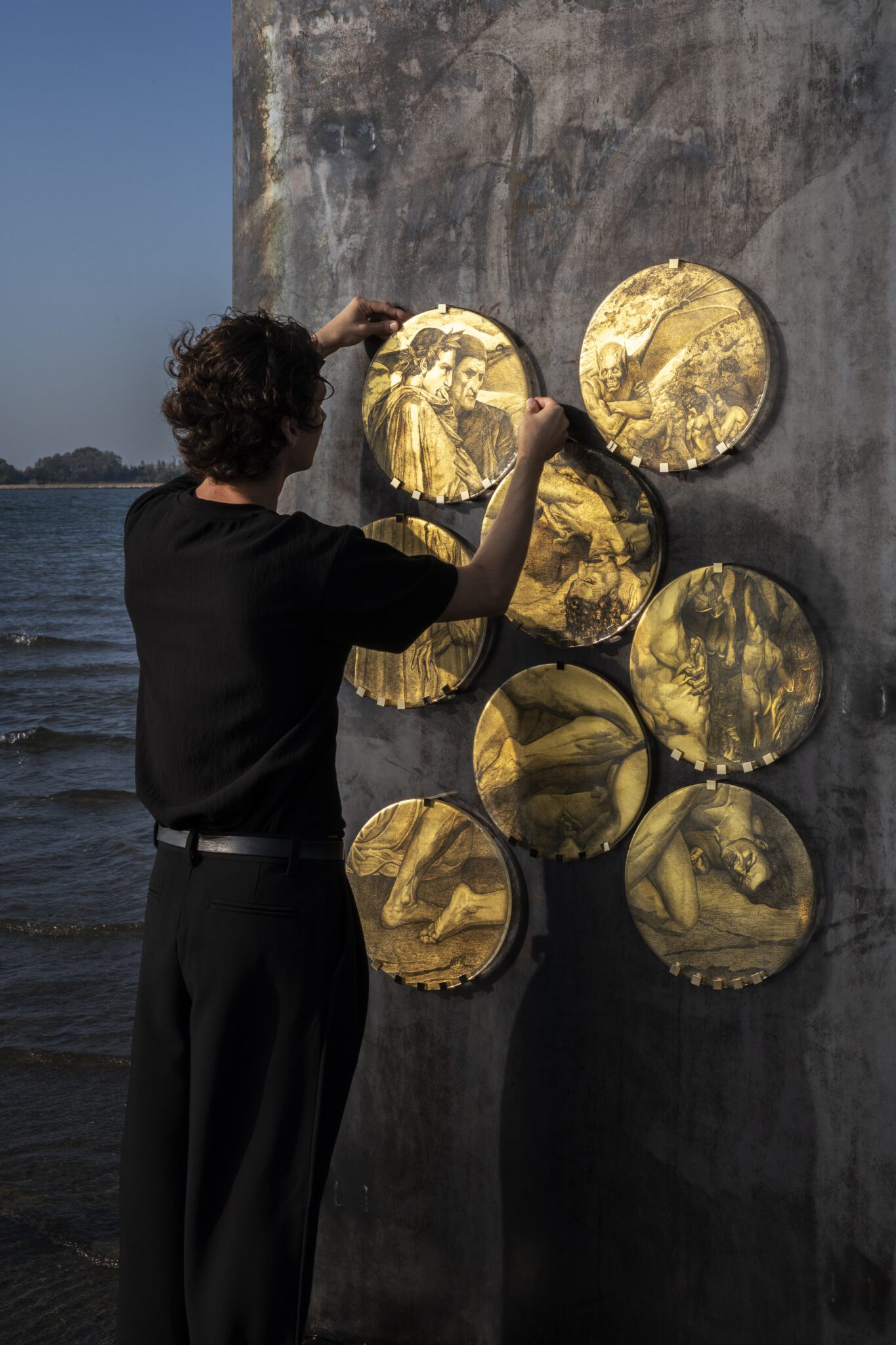
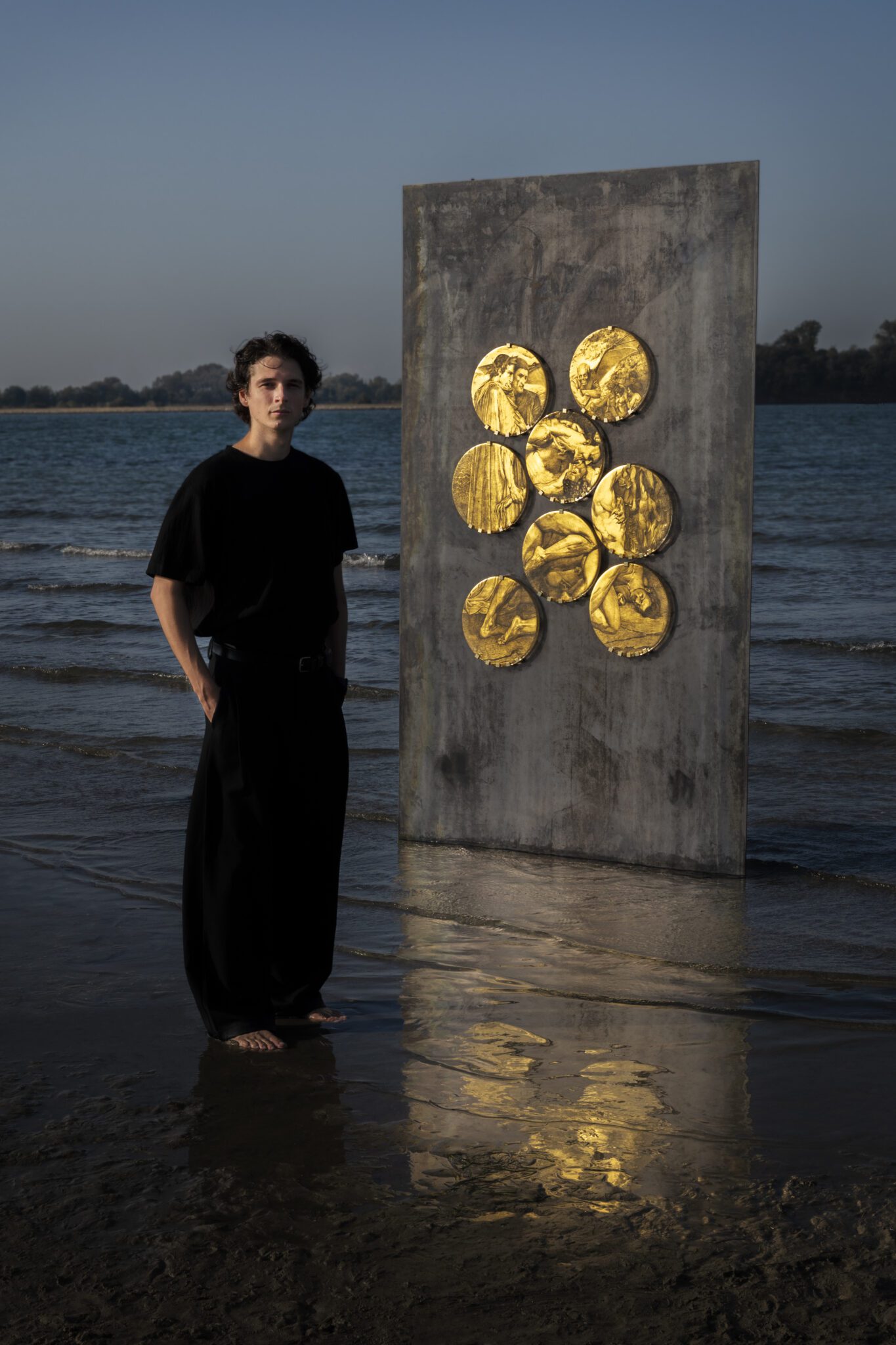
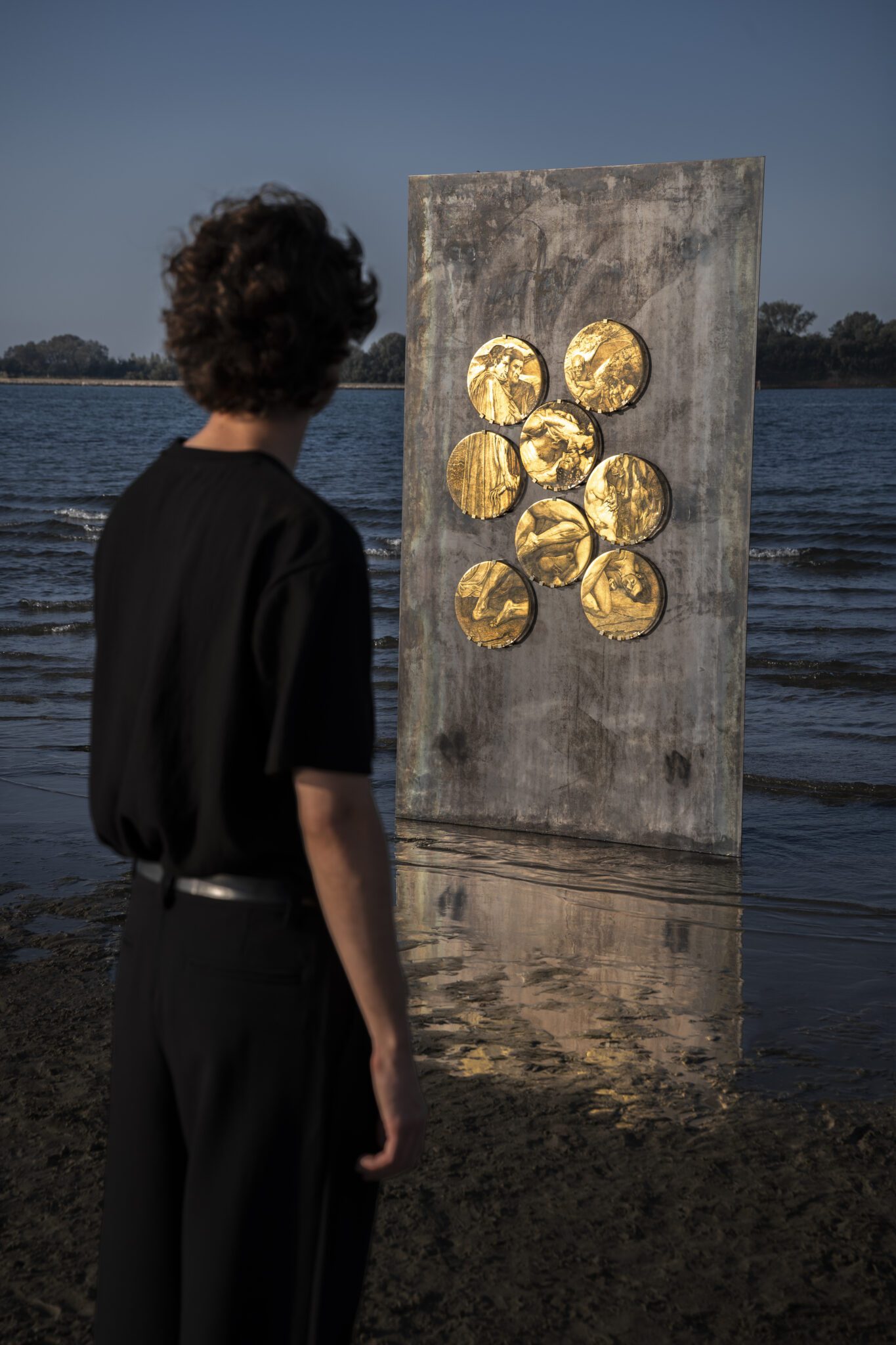
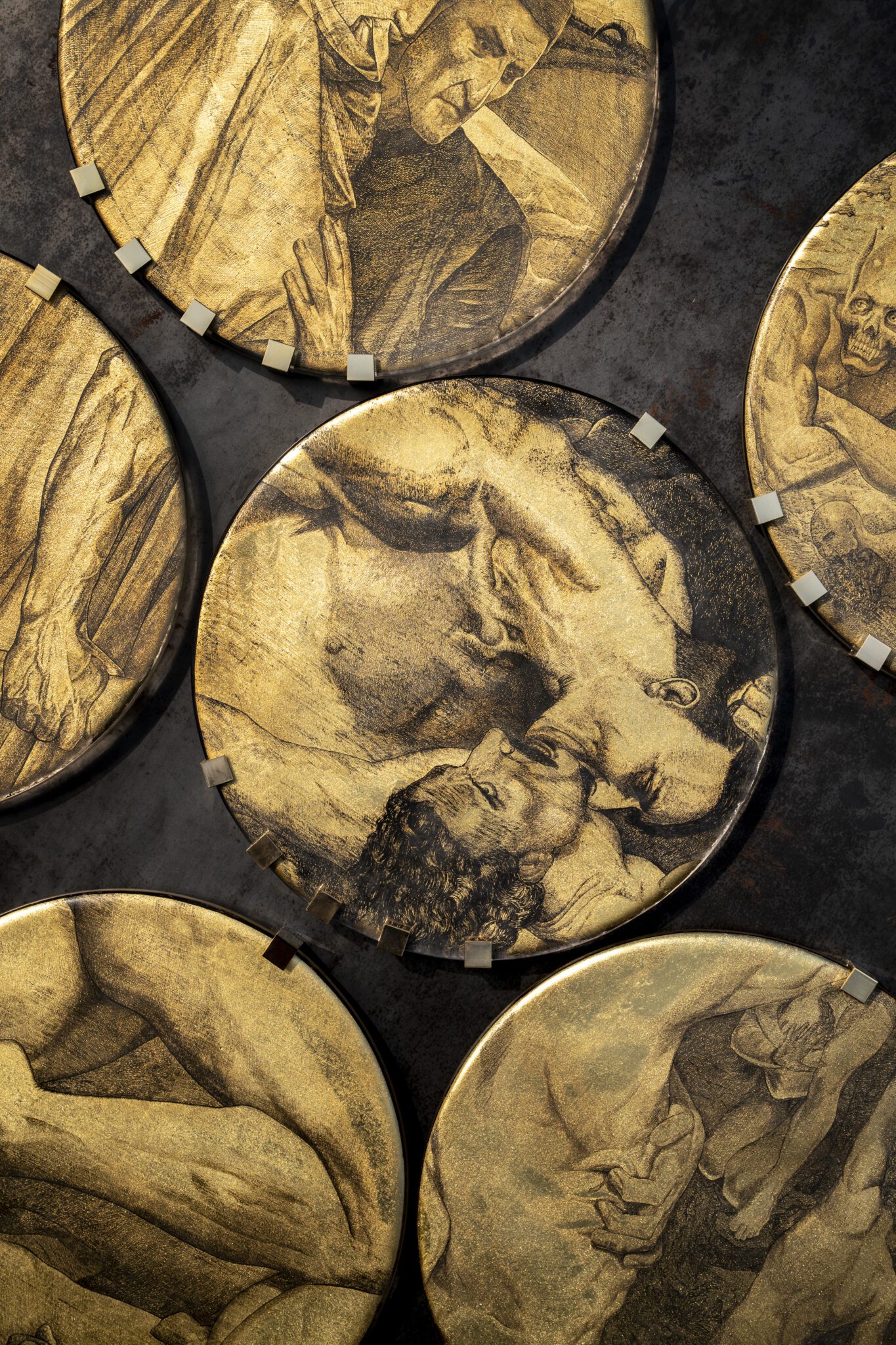
Taking inspiration from the distinctive characteristics of Venetian windows, Riccardo Toso Borella proposes an infernal vision inspired by William-Adolphe Bouguereau’s celebrated Dante and Virgil in Hell.
Long fascinated by the anatomical tension and movement of bodies in Bouguereau’s painting, the artist identifies an unexpected suggestion in their twisting forms: the movement of the bodies seems to evoke the shape of the Nazi swastika. This visual coincidence is coupled with a question: what would Dante have seen had he descended into Hell in the twentieth century? The two faces of Bouguereau’s damned figures are thus replaced by those of Adolf Hitler and Joseph Stalin.
To grasp the significance of Dante’s Commedia, it is not enough to recognise its extraordinary poetic power: one must also remember, and draw inspiration from, the courage with which Dante exercised his poetic licence, placing within the realms of the afterlife—and thereby passing judgement on the lives they had led—emperors, popes, political adversaries and men of his own time. This artistic and intellectual freedom had tangible consequences for Dante’s own life and remains, even today, a difficult lesson for both the artist and the individual.
The artist’s signature does not immediately offer itself to the viewer’s gaze. Instead, a self-portrait appears in the background, perfectly immersed in the drama of the vision. It is here that the work shifts its question from the past, and from the otherness, towards the present and towards introspection: we may observe another’s Hell while feeling ourselves entirely foreign to it, but the presence of the artist compels us to ask: what of us? What of those who remain invisible, whose names never inscribe themselves upon the pages of history? If there is a responsibility for the actions of those who wield power, what responsibility belongs to those who supported, enabled, or tolerated them? What is the fate, in the afterlife, of those who, through cowardice or indifference, failed to oppose them?
Although it depicts an infernal realm, the scene belongs to a space beyond, removed from the time of the living. Gold therefore assumes a transcendent function, recalling the symbolic value it possesses within the tradition of icons, while transporting it into a radically opposing context.
Completing the work in meaning is a poem composed by the artist in September 2026, presented below. The artist imagines himself as a pilgrim in Hell, guided by Dante, who describes to him the scene unfolding within the artwork.
“Dante, vieni me appresso: chi son quell’ombre
che’l vorticar bieco io veggo
in orrida pugna l’un l’altro menar?
Ed elli a me rispose:
“Ei furon del Sacro Roman Imper il Duce,
delle Steppe levanti il Tiranno.
Ciò che’n Polonia desian che si compose
il tradir del Barbarossa infin dischiuse.
Bada ben a quei che’n altro tempo a lor miranno
che delli Inferi le porte non vollero mai richiuse.”